What the AI Got Wrong on My First Horror Map (and How I Fixed It)
AI nailed the scary atmosphere but missed the systems that actually make horror work.
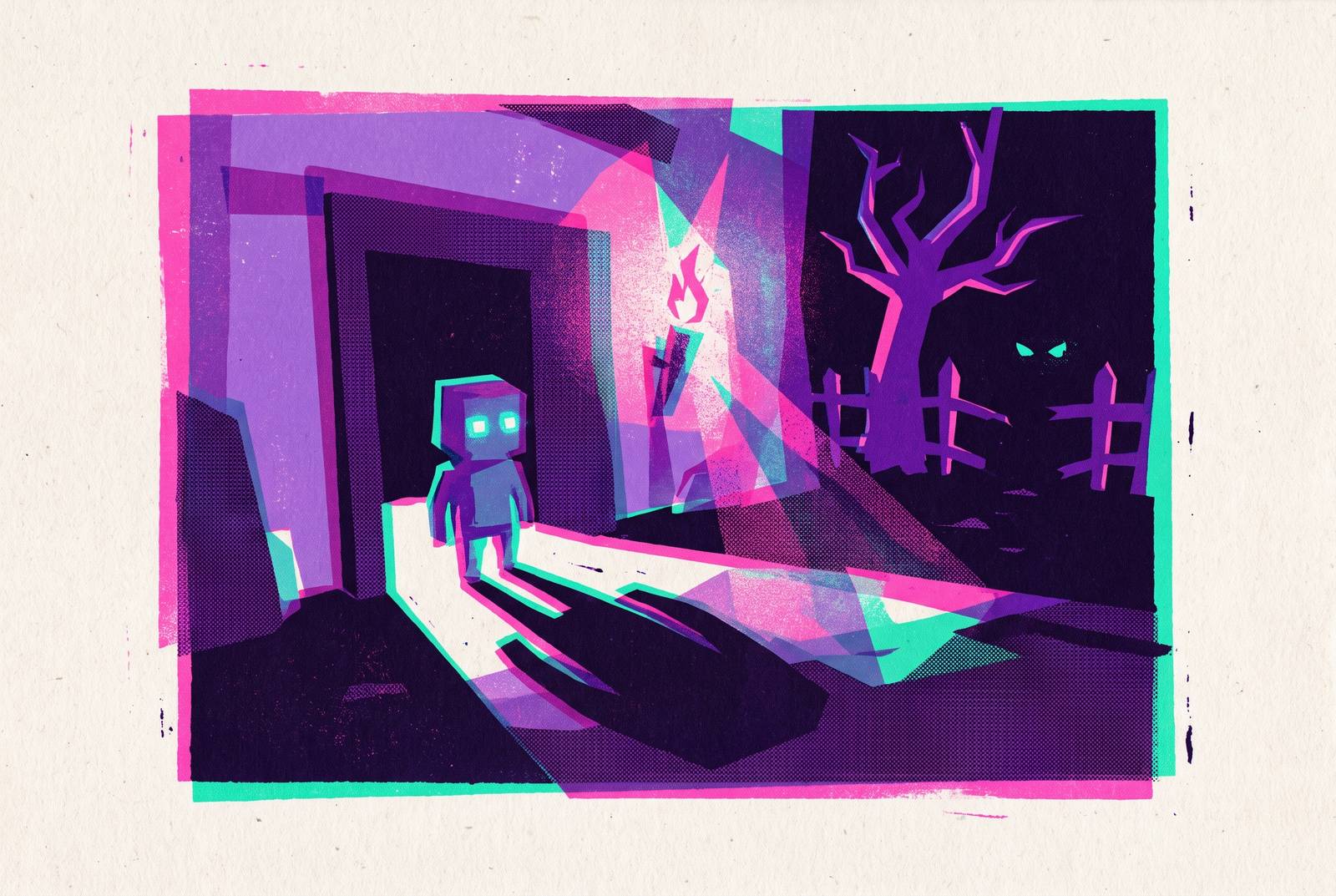
A first prompt for "a scary horror map" tends to produce a dark room with nothing in it, and that's the whole problem in one sentence. Horror fools new AI-assisted creators faster than any other genre, because its surface elements (darkness, a monster, a flashlight) take seconds to generate, while the actual sources of fear never appear in a still frame. A perfectly modeled monster standing in a bright room reads as a 3D asset, not a threat. A blurry shape half-glimpsed at the end of an unlit corridor, flashlight flickering, something scraping behind you, is a different thing entirely, and almost none of that effect comes from the art. Fear lives in how systems behave, not how they look, so an AI image generator or a single vague prompt hands over the easy quarter of the work and leaves the other three-quarters completely untouched. That gap between "AI made me a picture" and "AI made me a game" opens widest in horror, precisely because so little of the scare was ever in the image. None of this is an argument against using AI to build horror games. It's an honest account of what the tools hand you by default, and what still needs direction from the person typing the prompts.
The five systems that make a horror game scary
If a horror game actually works, stripping it down to its moving parts reveals the same five systems every time. None of them is the monster's appearance, and knowing all five going in is what makes it possible to spot which one the AI broke.
Atmosphere comes first: darkness, a tight light source, fog, sound. Fear lives in what the player cannot see, so a horror map is mostly an exercise in controlling vision and hearing.
Second is an unbeatable threat. The monster cannot be fought head-on, only avoided. Horror runs on helplessness rather than combat, so the moment a player can win a straight fight, the tension drains out of the whole map.
Third is a hiding or line-of-sight system. Avoidance needs to be a skill: the enemy has to detect the player through sight or sound, and the player needs a real way to break that detection.
Fourth is resource scarcity: a flashlight battery, limited stamina, scarce items. Something is always running out, so the player is never fully safe, and every choice carries a cost.
Fifth is timed scares: hand-placed moments of sudden threat, spaced out by long quiet stretches. The quiet is what makes the loud land.
All five need to be built and tested individually. A prompt that asks for all five at once produces a map that's hard to debug and impossible to tune, because no single failure can be isolated from the rest.
Mistake one: asking for "a scary horror map" in a single prompt
The most destructive first move is writing one giant prompt that tries to cover every horror requirement at once. It feels efficient. It produces something that's impossible to debug and impossible to tune, because the output never contains a single system built deliberately, just a dark room with nothing else going on.
That's the mistake almost everyone makes on a first horror map: ask for "a scary horror game" in one shot, get a vague blob. The mega-prompt fails in horror specifically because the five component systems each need to be playtested in isolation before anyone can tell which one is actually broken. Cram them together and a flat, unscary result gives no clue whether the problem is the lighting, the monster, the resource system, or all three fighting each other.
The fix is a sequential workflow. Build the five mechanics one at a time. Playtest each in isolation. Layer them only once each one works on its own. A practical starting point helps here too: open a survival or adventure template rather than a blank project, so camera, movement, and collision already exist, and the AI's effort goes toward the horror-specific parts. Once something breaks later in the process, the cause is obvious, because only one system was added since the last working playtest.
Mistake two: atmosphere that looks dark but doesn't feel dangerous
A room can look pitch black in a screenshot and still feel completely safe once a player is actually standing in it. Darkness someone can see through isn't darkness that does any work.
The usual culprits: a flashlight cone that's too wide, fog that's too thin, or a stray ambient light source the AI left switched on without being asked. Any single one of these bleeds away tension before the monster ever shows up, because the player's eye adjusts to the scene and stops feeling threatened by it.
The fix is to describe the atmosphere in concrete, physical terms. Something like: remove the ambient light so the only light comes from the player's flashlight, keep that flashlight a tight cone in front of the camera, add light fog, add a low slow ambient hum and an occasional distant creak. That's a spec, not a vibe, and it gives the AI something to build against.
The playtest question for atmosphere is a single one: does the empty space already make someone want to leave? A map that isn't tense before the monster appears won't be tense after. Visibility balance matters here too, since too dark leaves players unable to navigate. The fix is player-controlled light, a flashlight or lantern with limited duration, combined with just enough ambient light to guide movement without revealing everything in the room. Test it on different monitor brightness settings as well, because a scene calibrated on one screen can read as either washed-out or completely black on another. Get the atmosphere right in isolation, with no enemy in the level yet. That empty hallway becomes the baseline everything else gets measured against.
Mistake three: enemy AI that either teleports onto you or ignores you entirely
The most common mistake with enemy AI is asking for the full hunting behavior in one request, then having no way to tell which part of it is broken when the monster either ignores the player completely or snaps onto them from across the map.
The fix is three separate passes. Pass one asks for presence only: a monster that walks a fixed patrol path and doesn't notice the player yet. The job here is just confirming it moves, animates, and navigates the level without falling through the floor, before it's allowed to be dangerous.
Pass two adds line of sight: give the monster a vision cone, and when it sees the player, it switches to chasing faster than the player can walk. Lose sight of it for a few seconds and it returns to patrolling. Playtesting confirms that whole reaction chain actually fires the way it's supposed to.
Pass three adds sound detection as an independent sense: if the player sprints nearby, the monster investigates. Sound gets tested alone before it's combined with sight, so a failure in one doesn't get mistaken for a failure in the other. If something breaks during combination, disable the sense that was already working, test the new one by itself, fix it, then turn the first one back on. Debugging both senses at once just means guessing.
Predictability is a separate, sneaky failure: once a player understands the pattern, the fear evaporates regardless of how good the chase animation looks. Randomized decision-making and the occasional rule-breaking moment, an enemy behaving slightly outside its usual loop, keep players from ever feeling fully safe once they think they've solved the AI. Audio misdirection helps the same cause: sounds suggesting the enemy is somewhere it isn't mask its true location and keep the whole system unpredictable without adding any more complex logic.
Mistake four: resource scarcity that nags instead of terrifies
A flashlight with a draining battery is only scary if the drain rate and pickup spacing make running low feel like a real decision, rather than a constant low-level irritation the player learns to tune out.
The AI tends to generate resource systems at one of two broken extremes. Either it's trivially easy, pickups scattered everywhere, drain so slow it's barely noticeable, or it's punishingly fast, with the battery dying before the player has even learned the layout of the level. Both destroy tension, just from opposite directions.
The emergent fear that a battery mechanic is supposed to produce works like this: a player learns to switch the flashlight off to save power, which makes the space darker, which makes the monster harder to track. The player's own cost-saving instinct becomes the source of new danger, which is a much better trap than any scripted event. Getting there takes tuning the drain rate and pickup spacing until running low feels like a decision. One tool with a real cost beats five free gadgets every time.
The prompt fix is to describe the intended feeling. Something like: the player should feel genuinely anxious about battery level in the second half of each room, not the first. That gives the AI an actual target to calibrate against. And scarcity only means anything if there's an active threat in the room with it. A draining battery in a monster-free level is just an annoyance, so the resource system and the enemy system need to be tuned together, not treated as separate problems.
Mistake five: jump scares that fire into noise
A jump scare placed in the middle of a chase, with the player already panicked and the audio already chaotic, lands with the force of a wet napkin. A scare that doesn't land is almost always firing into noise, a stretch of chaos before it. That noise leaves no quiet underneath it to contrast against, and without that contrast the scare has no weight to deliver.
The structural requirement is simple: a scare works because of the calm sitting around it. That contrast can only be controlled by placing the scare by hand, rather than letting the AI scatter triggers randomly across the map. Two hand-placed scares in an entire map beats twenty scattered ones. Random spawning fails for a few reliable reasons: players start sensing the pattern, scares fire when nobody's even looking at the screen, and the quiet stretches that were supposed to build dread get chewed up by noise instead.
Describing the scare concretely matters as much as placing it concretely. A prompt that specifies the trigger condition and the calm leading into it, something like: after the player enters the east corridor and walks for a moment with no sound cues, trigger the scare, works far better than a generic instruction to add jump scares throughout the level. A third scare is almost always one too many. The second lands because the player has had time to forget the first. The third arrives expected, so it arrives defused. Leaning on jump scares too heavily is usually a sign that atmosphere and enemy AI aren't carrying their share of the work. Scares are punctuation. They aren't the sentence.
What the AI handles well and cannot judge
AI handles the mechanical scaffolding of a horror map well, the kind of setup that used to take days of manual work: patrol paths, vision cones, battery drain, fog settings, trigger zones. What it cannot do is tell anyone whether the result is actually scary, because fear is a felt experience, and the only way to measure it is playtesting.
Whether the flashlight cone is too wide, whether the monster gives up the chase too quickly, whether the second jump scare lands but the third is one too many, these are all feel questions. Feel only comes from walking the hallway, not from reading a spec sheet. Framing the process as "here's what the AI got wrong" is the correct relationship to have with the tool, since even experienced developers are still working out where AI judgment ends and human playtest judgment has to take over.
Browser-based AI creation tools make this loop realistic for a first-time creator, since they require no installation and no prior development experience. That accessibility matters because it lets playtesting happen in the same session as the building. The iteration loop itself, build a piece, play it, describe the fix, rebuild, is the actual skill being learned here. The map is just the byproduct.
A working prompt sequence for a first horror map, from atmosphere to scares
The workflow that actually produces a scary result is sequential, one system at a time, with a playtest gate between every step. Each playtest exists to surface a problem before the next layer gets added on top and buries it.
Step 1 is atmosphere first, with no monster in the level. Describe the lighting, fog density, flashlight cone width, and ambient audio in concrete terms, then run the level and test one thing: does the empty space already feel uneasy? Fix it until it does before anything else gets added.
Step 2 is the monster as a patroller only. Ask for presence, not threat: a monster on a fixed patrol that doesn't yet notice the player. Confirm it moves, animates, and navigates correctly before it's allowed to become dangerous.
Step 3 is line of sight, then sound, added separately. Add the vision cone, playtest it. Add sound detection, playtest that too. If something breaks, disable one sense, fix the other in isolation, then re-enable the first.
Step 4 is one resource with a real cost. Add a battery mechanic with a drain rate and pickup spacing tuned so low battery feels like a decision. Playtest until the resource and the enemy together create a moment where switching the flashlight off feels like the right call, even though it makes the situation worse.
Step 5 is two hand-placed scares, maximum. Specify the trigger condition and the roughly ten-second calm that precedes it. No random spawning, and no more than two scares in the whole map.
Every prompt along the way should describe the intended feel, not just the mechanic. "The player should feel hunted, not harassed" gives the AI something to calibrate against that a plain feature list never does. The whole sequence, from concept to a playable, genuinely scary prototype, is something a first-time creator on a browser-based AI platform can finish without installing software or writing a line of code. The bottleneck is however long the playtesting takes.