What Happens When You Type a Game Idea Into studs.gg
A one-line prompt becomes a playable game in about an hour.
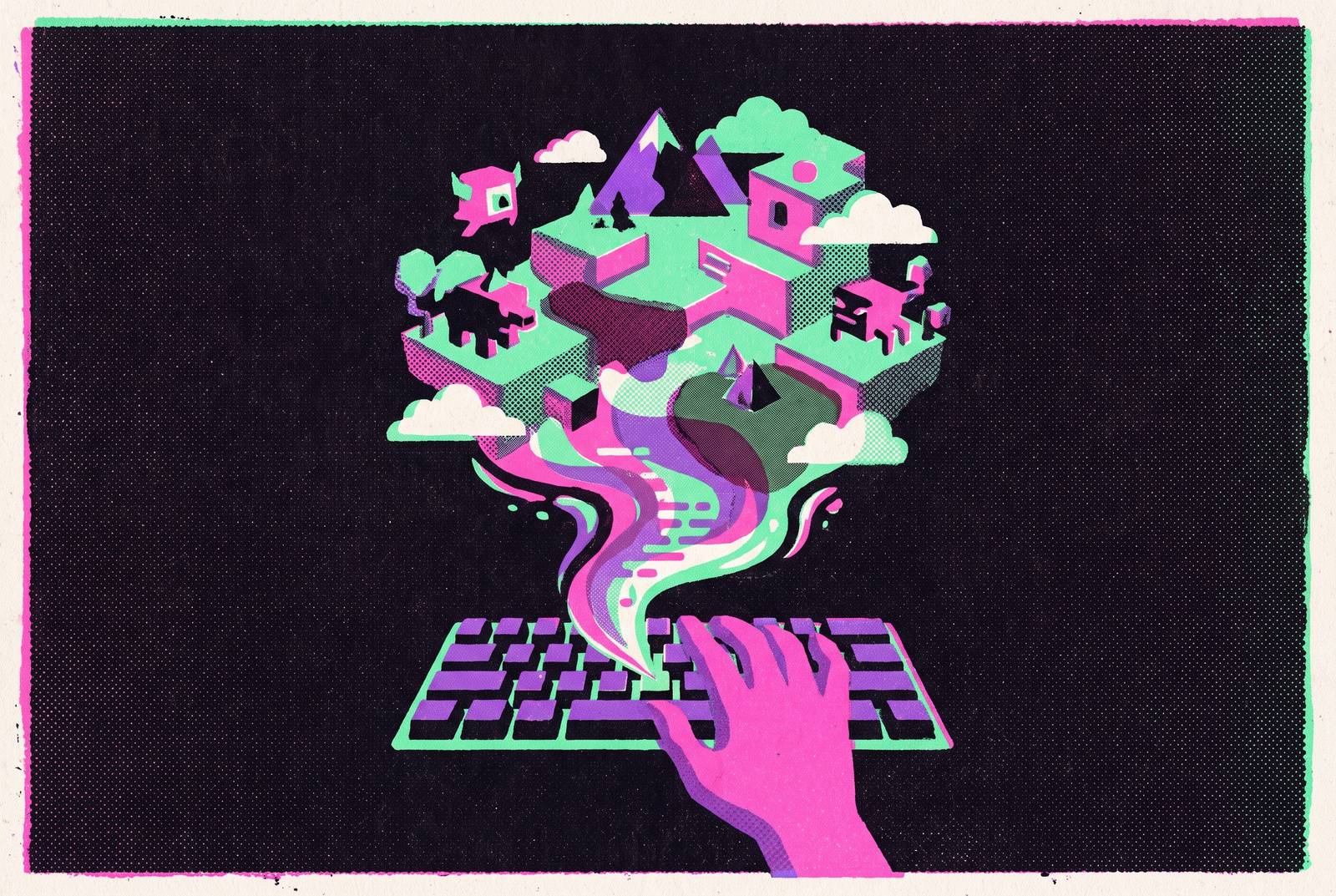
The traditional path asks you to install software, learn to script, and pick up 3D modeling before you've built a single level. That's not a hobby but a part-time degree, and every one of those skills takes months to learn, none of them having anything to do with the actual game idea sitting in your head. It runs in a browser, asks for nothing more than a plain-text description of the game you want, and turns that description into a published, playable game in about an hour.
The three-step promise
studs.gg's whole pitch fits in three moves: describe your game, let the platform build it, then publish or download what comes out. Describing it takes one or two sentences, covering what kind of game it is, what you do in it, and how it should look. The platform already supports a wide spread of genres, including tycoons, obbies, simulators, shooters, horror, sports, and party games, so the range on offer is bigger than it sounds. The homepage's own example sets the tone for how far you can push a prompt: "a haunted drive-thru at 3am. Take orders, survive the night." That's permission to get specific and a little strange, not a cautious template. Once you hit Build, the work moves out of your hands entirely. The platform takes over, you step back, and the next thing you do is wait.
Writing a prompt that the build pipeline can act on
A working prompt covers three things and only three things: the game type, the core action, and the visual feel. Say what kind of game it is, say what you do in it, say how it should look, and you've given the pipeline everything it needs to start. One or two sentences is enough. After you submit it, studs.gg might ask a few short clarifying questions, then show you a handful of concepts to pick from, or let you skip straight to them if nothing needs clarifying.
The single word that does the most work in any prompt is the genre. Describe an obby and the platform builds an obby. Describe a tycoon and it builds a tycoon. That sounds obvious until you remember that matching output to intent is exactly the problem the Season 2 rebuild was built to solve, which tells you it wasn't always this reliable. The prompts that go wrong tend to fail in one of three ways: too vague to signal a game type at all, too long (a paragraph of backstory with no actual mechanic buried in it), or aimed at a genre the platform doesn't support yet. Keep it short, keep it concrete, and name your genre like you mean it.
What the Design stage does before any building starts
Design is the first of four automated stages, and it's where your one or two sentences get turned into something the platform can actually act on. The platform reads your description and generates a handful of concepts, and whichever one you pick steers everything that happens afterward. This is also where genre-specific structure gets decided. An obby needs layout logic. A tycoon needs a progression system. Those are different problems, and studs.gg resolves which one it's solving before any building starts.
If the concepts don't look like what you had in mind, this is your moment to redirect, not after an hour of build time has already passed. The short clarifying questions that sometimes show up before the concepts appear are how Design turns something ambiguous into something buildable.
What the 3D Build stage constructs
Once a concept is picked, the 3D Build stage takes over and starts generating the game's actual physical world: terrain, structures, objects, the whole spatial layout, built without a single click of manual modeling on your end. It runs automatically the moment Design wraps, and you don't touch it while it's working.
Budget about an hour for a typical run. Add your email under Account, turn on the finished-run notification, and go do something else. Nobody needs to stare at a progress bar for sixty minutes. Because the whole thing runs in the browser, closing the tab won't interrupt anything as long as notifications are on, so there's no reason to treat the wait like a hostage situation.
What gets built matches the genre you picked. An obby comes out with platforms and obstacles. A tycoon comes out with a buildable space and the infrastructure for progression. A horror game comes out shaped for atmosphere and tension, not for optimal platforming. Once the build finishes, you get your first real look at it: 3D previews of what the platform constructed, which is the first moment you can actually judge the thing with your own eyes instead of your imagination.
What the Script stage adds
A 3D environment without rules is just a diorama. Scripting is the stage that gives it rules: win conditions, enemy behavior, shop logic, movement systems, the pieces that turn a scene you can walk around into a game you can actually play or lose. You write none of it. The Script stage generates all of that logic automatically, using your original prompt and the choices already locked in during Design.
What gets scripted depends entirely on genre. A shooter needs hit detection and respawn logic. A tycoon needs a currency system and a path for building progression. An obby needs checkpoints and death logic that actually sends you back to the last one. Scripting the wrong genre produces a game that doesn't behave like the one you described, and fixing that mismatch was the specific target of the Season 2 rebuild. Under the hood, studs.gg spreads this work across multiple frontier AI models rather than leaning on one, with Gemini 3.7 Flash currently its top model by token usage on OpenRouter. The point for a first-time creator isn't which model does what. The point is that scripting, the part of game development that scares off the most beginners, happens without you ever opening a code editor.
What the Test stage checks before the game reaches a player
Test is the fourth and final automated stage, and its job is to check that what Design and 3D Build and Script produced together actually functions as a game before you ever see it. You don't trigger this stage yourself. It runs between Script and the moment the 3D previews show up in front of you, catching errors before they become your problem.
Once Test completes, you get the previews, and from there you can publish or download the game. The practical effect is that what you're reviewing has already passed a basic playability check. You're not looking at raw, untested output that might crash the second someone touches it. That said, automated testing has a ceiling. It can catch broken logic and obvious failures, but it isn't the same as a real player poking at every corner of your game looking for ways to break it, which is why the next stage, the one where you keep talking to the platform after the first build, carries so much weight.
How to change a game after the first build without starting over
Nobody writes the perfect prompt on the first try, and studs.gg is built around that reality instead of pretending it away. A build isn't a final answer, it's a draft you can talk to. Send another message in the same project, something like "make the enemies faster" or "add a shop at spawn," and the platform refines what's already there instead of starting from zero.
The platform's own guidance is to keep each message small and specific. One targeted change per message beats a wish list of five changes crammed into one prompt. If what came out is so far off from what you wanted that no amount of small tweaks will get you there, the better move is starting a fresh project with a sharper prompt, which is why the prompt-writing advice earlier in this piece isn't just a formality.
Your first build is free, one prompt, one build, and you keep whatever comes out of it. Changing that game afterward, or running an entirely new build, requires Pro. That's just the shape of the deal, and it's one more reason a strong first prompt pays off twice, once in a better first build, and again in fewer paid revisions needed to get there. The rhythm that works best: build once, look honestly at what you got, then refine with small, specific messages rather than a wholesale do-over. That rhythm works best of all when the first build was already close, since the Season 2 rebuild was aimed squarely at making that first build close to begin with.
What the platform has shipped across its release seasons
Any first-time creator should ask whether what comes out the other end is actually any good. studs.gg's own release history is the honest answer, and it's more convincing than a marketing claim because the team said the rough parts out loud. studs.gg ships in named seasons, each one a new version of the generation engine, and the output has gotten better with each release rather than staying flat.
The first version launched publicly on 19 December 2025, and the team didn't dress it up. Their own words at the time: "Is it perfect? No. As you can see, it's a little bit quirky. But with the right team and some insane tech being built, we're looking to 10x this output in the coming months." That's a company admitting its first games were a little weird, in public, on launch day.
Season 2 followed after six weeks of rebuilding the generation engine from scratch, launching on 16 March 2026. The team was just as direct about what had been wrong before: "season 1: you showed up. the product wasn't ready. you described games. you got something close. not anymore." The specific fix closed the gap between what a creator typed and what the build actually produced, the same gap that appears repeatedly throughout the rest of this pipeline.
studs.gg is aiming to get a first-time creator from a sentence to a published game they would otherwise never have shipped at all, not to replace a studio. Judged against "months of learning software versus about an hour of waiting," the current engine, the product of multiple full rebuilds aimed at exactly this problem, is the strongest version of that trade so far.
What to do the moment your build finishes
When the build finishes, you've got two options sitting in front of you: publish it or download it. Either way, the thing that took roughly an hour to make is no longer an idea. It's a real, playable game. Publishing is where the whole promise closes the loop: a sentence or two of plain text became a live game, with no software installed, no code written, and no months spent getting there.
The next move is simple. Publish what came out of your first build. Drop it in the Discord, where 5,774 creators and counting are building alongside you; the response from that community tells you what to fix in your next message. Studs.gg already runs on that rhythm at scale, with 100k+ creators having gone through the same three steps before you. Your first build just needs to exist so the next message you send has something real to improve.